Home Services How I work Subscription About me Blog Contact Write to me
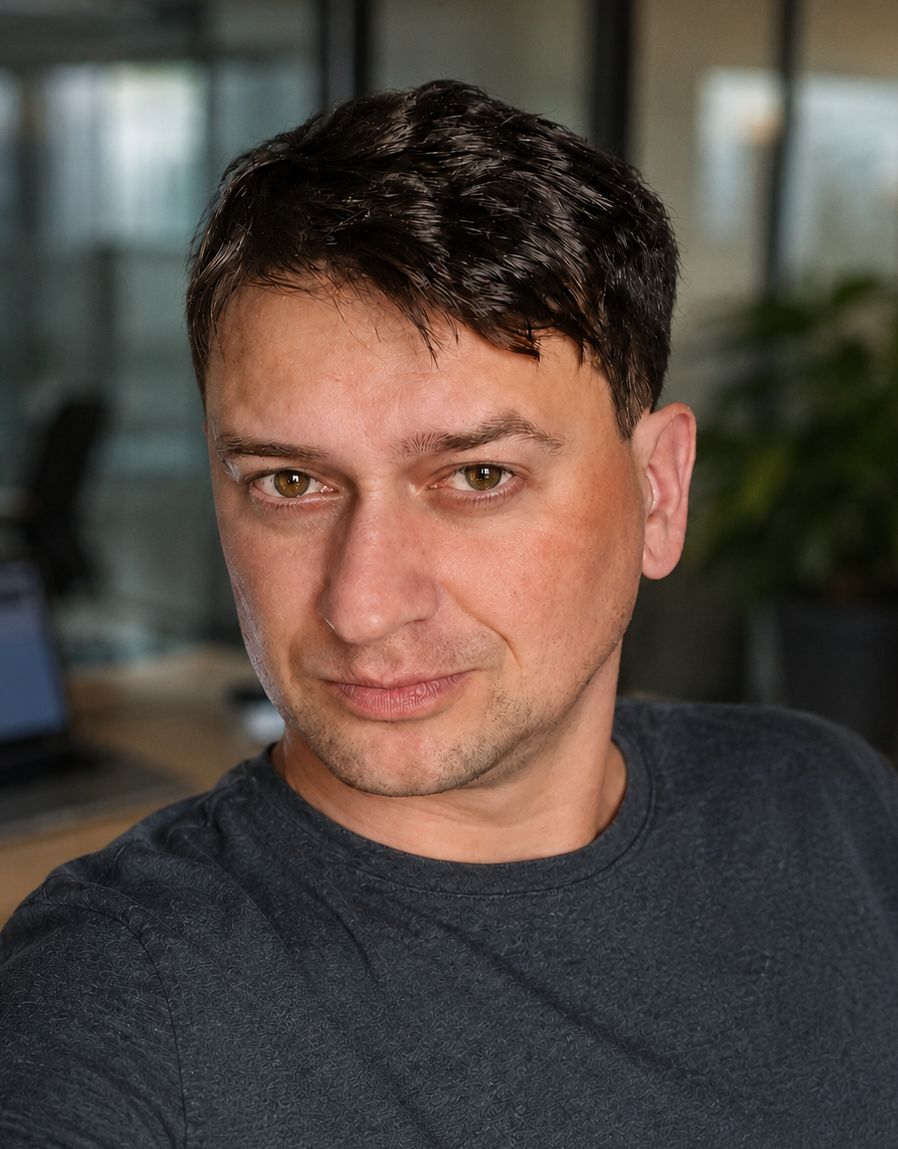
Viktor Pashaiev, Senior Linux & DevOps Engineer, Kraków
Senior Linux, SRE & DevOps Engineer

Viktor Pashaiev

I started with Slackware on a live network in 2005. Today I build infrastructure that actually works - automation, Kubernetes, cloud, system reliability. For companies that don't want to make phone calls at night.

History

Who I am

My professional career started with Linux in 2005 with a slightly crazy task: migrating an entire office from Windows NT to Linux on a live network. We picked Slackware. To this day, I have no idea why we chose it, but it worked. When the first DHCP server handed out an IP address, it felt like magic. I changed my terminal font to green, felt a bit like Neo from The Matrix, and never looked back.

For the last 20 years, I’ve been building, automating, and rescuing IT infrastructures. I’ve managed everything from bare-metal servers to massive Kubernetes clusters and cloud environments. For a large part of my career, I was the final escalation point - the engineer they called when a critical production system went down, nothing made sense, and everyone was starting to panic.

It turns out, I actually like those situations. There is a certain kind of zen in staying calm and reading strace logs or analyzing network packets at 3 AM.

"The system always tells the truth. You just have to know where to look."

Over the years, I've learned a few universal truths:

  • A backup that nobody has ever tested is just a file taking up space.
  • If you configure a server by hand more than once, you should have automated it.
  • The smarter the network looks, the more often the real problem is something surprisingly simple.

Today, as an independent consultant, I take full responsibility for my clients' infrastructure. My goal is simple: make your servers so stable, secure, and predictable that IT becomes the most boring and uneventful part of your business.

Tier-3 Escalation
When everyone else gave up - they called me. Strace, tcpdump, gdb at the kernel level. Most incidents turned out to be something completely different.
Ansible Library → standard
I wrote a library of roles that became the internal standard. Server setup time: from days to an hour. Manual work reduced by over 50%.
Security as a CI/CD blocker
The build fails if there are critical vulnerabilities. Not as an optional step - as a blocker. Now everyone has forgotten it used to be any different.
EN C1 · PL C1/C2 · UA/RU native
Documentation, incidents, client communication in English and Polish - without language barriers.
Skills

Technology Stack

IaC & Automation
TerraformAnsibleGitLab CI/CDGitHub ActionsArgoCDFluxJenkins
Cloud & Containers
AWS (EKS)GCP (GKE)AzureKubernetesOpenShiftDockerKubeVirtVMware vSphere
Monitoring & SRE
PrometheusGrafanaLokiZabbixELK StackNew Relic
Linux & Debugging
RHELUbuntuDebian / SUSE / FreeBSDstracetcpdumpgdbHugePages / NUMA
Network & Security
TCP/IPBIND / PowerDNSHAProxy / NginxWireGuardnftables / iptablesCIS Hardening
Programming
PythonBashboto3TerratestMolecule
E-commerce & Web
WooCommerceWordPressPrestaShopStripeRevolut PayInPost / payment gatewaysReactNext.jsTypeScriptREST APISEO & Analytics
Experience

Where I've been, what I've done

2019 - present
Senior DevOps & Infrastructure Consultant
Freelance / B2B · Remote
  • Full stack simultaneously: architecture, IaC, Tier-3 support, production incidents - for multiple clients at once
  • Terraform + Ansible: server setup time reduced from days to under an hour
  • Kubernetes on AWS (EKS) and GCP (GKE), ArgoCD, GitOps - hundreds of nodes, multiple regions
  • Observability from scratch: Prometheus + Grafana + Loki, SLOs, dashboards that work at 3 AM
  • Security scanning as a CI/CD blocker, Linux kernel tuning at the NUMA and HugePages level
2016 - 2019
IT Infrastructure Consultant
  • On-premise → AWS and Azure migrations with zero downtime
  • Ansible roles library - internal standard, manual work reduction by >50%
  • Tier-3 debugging: strace, tcpdump, gdb, issues that the vendor couldn't solve
  • Managing large VMware vSphere environments (ESXi / vCenter)
2010 - 2016
Senior SAP Basis & Infrastructure Consultant
  • Linux kernel tuning for SAP HANA and NetWeaver: HugePages, NUMA, storage I/O
  • 24/7 HA clusters on Pacemaker and Corosync - zero unplanned downtime for several years
  • Kubernetes and OpenShift - hundreds of nodes, multiple regions
2005 - 2010
System & Network Administrator
  • Migration from Windows NT to Linux - on a live network. Slackware. We made it.
  • Linux and FreeBSD, DHCP, DNS, email, VPN - from scratch
Philosophy

How I approach work

01 - Automation
If you do it a second time - automate it
People get tired and make mistakes, especially at night. Scripts don't. When a script crashes, at least it always crashes the exact same way.
02 - Comments
Write why, not just what
Two months later you look at your own sysctl parameter and don't remember why it's there. A comment with context is a letter to your future self.
03 - Observability
Monitoring from day one
It's not something you add later. Later is always too late. A good dashboard is one you can use when everything is falling apart.
04 - Reliability
SLOs before you deploy anything
If you haven't defined what "working normally" means, every incident turns into an argument. A long, ugly argument at 4 AM.
05 - Security
Hardening as part of infrastructure
CIS via Ansible. Security scanning as a CI/CD blocker. Tools that make doing it right the easiest path.
06 - Depth
Don't stop at the application layer
When everything obvious is checked and nothing is found - strace, tcpdump, gdb. Most interesting problems lie beneath where everyone else is looking.
Contact

Let's talk about the project

20 years of experience, full stack from architecture to production.

Kraków and remote. B2B, VAT invoice.
Fast response time, full responsibility for the project.